« Le pouvoir transcendant de la musique me fascinera toujours. »
Armand Amar
Compositeur inclassable, Armand Amar a forgé un langage musical qui traverse les cultures et les esthétiques. Des traditions orales au minimalisme, des instruments ancestraux à l’orchestre symphonique, il explore sans relâche de nouveaux territoires sonores. Nourrie par les œuvres de Steve Reich, Philip Glass ou Terry Riley, son écriture s’est construite loin des conventions, dans une recherche permanente de timbres, de rythmes et de rencontres.
C’est dans la danse qu’il trouve son premier territoire de création. Auprès de Peter Goss, puis de Carolyn Carlson, Mourad Merzouki, Russell Maliphant ou des BalletBoyz, il développe une relation intime entre le son, le corps et le mouvement. Une approche qui façonne durablement sa manière de composer : comprendre l’intention, construire une dramaturgie, faire naître l’émotion.
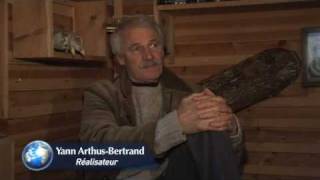
Cette écriture profondément narrative trouve dans le cinéma un nouvel espace d’expression. Il signe les musiques de films de Costa-Gavras (Amen.), Radu Mihăileanu (Va, vis et deviens, Le Concert), Rachid Bouchareb (Indigènes) ou Nacer Khemir (Bab’Aziz). Sa collaboration avec Yann Arthus-Bertrand, notamment pour Home, Human et Woman, donne une résonance particulière à sa recherche autour des voix, des cultures et de la condition humaine. En 2010, il reçoit le César de la meilleure musique pour Le Concert.
Parallèlement, Armand Amar poursuit une œuvre personnelle pour la scène et le concert, où se rencontrent grandes formations orchestrales, solistes et interprètes issus de traditions musicales du monde entier. Avec Leylâ et Majnûn ou Poemas del Agua, il affirme une écriture qui dépasse les frontières entre musique savante, traditions orales et création contemporaine.
Cette curiosité se prolonge avec Passeurs de sons, sa collection d’instruments du monde, présentée à la Fondation GoodPlanet, et dans son engagement pour la préservation et la transmission des patrimoines musicaux. À travers le Studio Babel et Passeurs de sons, il fait de la rencontre entre les musiciens, les cultures et les générations une composante essentielle de son travail.
La musique d’Armand Amar semble être née moins d’une volonté d’écrire que d’une manière de donner voix à ce qui nous dépasse.
La musique d’Armand Amar semble être née moins d’une volonté d’écrire que d’une manière de donner voix à ce qui nous dépasse.
Photographie : Julie Ansiau
Né le 25 janvier 1953 à Jérusalem et élevé au Maroc, il rencontre très jeune les percussions et les traditions musicales de transmission orale. Le zarb, les tablas, les congas lui enseignent d’abord ce qui précède peut-être toute musique : le rythme, le souffle, le geste, la présence. Puis, en 1976, la rencontre avec le chorégraphe Peter Goss inscrit plus profondément encore la musique dans le corps et dans l’espace. De ces expériences fondatrices naîtra une écriture où le mouvement, la respiration et l’écoute ne cesseront de dialoguer.
Cette relation avec la danse se poursuivra toute sa vie, auprès de Carolyn Carlson, de Mourad Merzouki, de la Russell Maliphant Dance Company ou des BalletBoyz — Inanna avec la première, Pixel et Vertikal avec le second.
Car chez Armand Amar, écouter ne signifie pas seulement entendre. C’est se rendre ouvert à ce qui vient. Recevoir ce qui affleure, ce qui traverse, parfois avant même que la pensée puisse le nommer. Sa musique procède de cette sensibilité qui accueille les êtres, les lieux, les voix et ces hasards qui jalonnent une existence et dont on découvre parfois, bien plus tard, qu’ils dessinaient un chemin.
Compositeur pour la danse, le théâtre et le cinéma, il développe ainsi un langage singulier dans lequel l’orchestre occidental rencontre des voix et des instruments venus du monde entier. Mais cette rencontre ne relève jamais de l’exotisme ni de la juxtaposition. Chaque timbre porte une mémoire, une culture, une manière d’habiter le monde. Et lorsque ces mémoires se rencontrent, quelque chose de leur origine particulière demeure tout en rejoignant une unité plus vaste.
C’est peut-être là que réside la dimension profondément transcendante de sa musique : dans sa capacité à faire entendre, au-delà de la diversité des langues, des peuples et des traditions, ce qui les relie.
À partir des années 2000, Armand Amar devient l’une des figures majeures de la musique de film. Il compose notamment pour Costa-Gavras, Radu Mihăileanu, Rachid Bouchareb, Nacer Khemir, et également pour les documentaires de Yann Arthus-Bertrand. Ses partitions accompagnent des œuvres emblématiques telles que Amen., Va, vis et deviens, Le Concert, Indigènes, Bab’Aziz, Home, Human et Woman.
La musique du Concert lui vaut en 2010 le César de la meilleure musique écrite pour un film. Son travail reçoit également de nombreuses nominations et distinctions internationales, parmi lesquelles un Gopo Award, un Amanda Award et un prix de l’International Film Music Critics Association.
Parallèlement, il poursuit une œuvre de concert. Leylâ et Majnûn ou l’amour mystique, oratorio mundi sur un livret de Leili Anvar, réunit une quarantaine de musiciens et chanteurs de plusieurs traditions : créé au Festival des musiques sacrées de Fès en 2011, il est donné Salle Pleyel en 2014. Poemas del Agua, œuvre symphonique en huit mouvements enregistrée avec l’Orchestre philharmonique de Prague, paraît en 2023.
En 2005, il crée à Montreuil le Studio Babel, lieu de composition et d’enregistrement, mais surtout lieu de passage et de rencontre, où se croisent orchestres, solistes, chanteurs et musiciens issus de traditions très diverses. Son nom même semble dire quelque chose de cette recherche : non pas abolir les langues ni effacer les différences, mais créer l’espace où, à travers elles, les êtres peuvent se rencontrer.
La même intention l’avait conduit, en 1994, à cofonder avec Alain Weber le label Long Distance, consacré aux musiques traditionnelles et aux artistes venus des cultures musicales du monde entier.
Collectionneur passionné d’instruments, Armand Amar œuvre également à la préservation et à la transmission des musiques de tradition orale. Depuis 2017, sa collection est présentée à la Fondation GoodPlanet, à Paris, où cinq salles lui sont entièrement consacrées. Son projet Passeurs de sons prolonge cette démarche en replaçant au cœur de chaque instrument ce qui lui donne véritablement une voix : le geste, la mémoire, la personne qui le fait résonner et la chaîne humaine par laquelle il nous est parvenu.
Ainsi se dessine, derrière le parcours du compositeur, une même ligne : recevoir, relier, transmettre.
Entre les cultures, entre les arts, entre les mémoires et les êtres, Armand Amar occupe cette place particulière du passeur. Non pas celui qui prétend détenir ce qui le traverse, mais celui qui lui prête une forme pour que d’autres puissent à leur tour le recevoir.
Car la musique possède peut-être ce pouvoir que les mots atteignent plus difficilement : traverser ce qui nous sépare pour atteindre en chacun cet endroit intime et universel que l’on appelle l’âme.
Faire pressentir, dans un souffle, une voix, un rythme ou un silence, quelque chose qui nous précède et nous dépasse.
À cet endroit, le compositeur devient un maillon : entre ce qui est reçu et ce qui est transmis, entre l’invisible et le sensible, entre le divin et l’humain.
Et la musique, le lieu de leur rencontre.
Le parcours
Avant le cinéma, avant les grandes formations orchestrales, avant même que la composition ne devienne le centre de son travail, il y eut les percussions, les corps en mouvement, les traditions orales et la découverte de musiciens venus d’autres cultures. C’est dans cet espace de circulation entre les mondes que son langage s’est construit.
Chez Armand Amar, une voix, un instrument ou un rythme ne sont jamais utilisés pour leur seule couleur. Ils portent une histoire, une mémoire, une façon particulière d’habiter le monde. Son œuvre s’est ainsi développée loin des frontières habituelles entre musique savante, musiques traditionnelles, création contemporaine et musique de film. L’orchestre occidental peut y rencontrer un zarb iranien, une voix mongole, un oud, des percussions africaines ou indiennes, sans que ces éléments soient réduits à l’ornement ou à l’exotisme.
Cette approche repose avant tout sur la rencontre avec les interprètes. Armand Amar aime écrire à partir d’une voix singulière, d’un timbre, d’un geste instrumental, parfois même de la personnalité d’un musicien. La partition devient alors un territoire commun où des traditions éloignées peuvent dialoguer sans perdre leur identité.
Le rapport au corps est tout aussi essentiel. Sa longue histoire avec la danse lui a appris à penser la musique non seulement dans le temps, mais également dans l’espace : accompagner un déplacement, prolonger un souffle, créer une tension, laisser apparaître le silence. Cette expérience traverse ensuite toute son écriture pour l’image.
Au cinéma, sa musique ne cherche pas simplement à commenter ce que l’on voit. Elle tente d’atteindre ce qui demeure derrière les images : leur part invisible, intérieure, parfois spirituelle. Dans ses partitions les plus dépouillées comme dans ses grandes fresques orchestrales et chorales, on retrouve une même recherche : faire naître l’émotion sans la forcer.
De Amen. à Va, vis et deviens, de Le Concert à Indigènes, de Bab’Aziz à Home, Human ou Woman, son œuvre accompagne depuis plusieurs décennies des films consacrés à la mémoire, à l’exil, à la transmission, à la spiritualité, à la violence de l’Histoire ou à la relation de l’être humain au monde.
Mais le cinéma ne constitue qu’une partie de son parcours. La danse, le théâtre, les projets personnels, la collecte d’instruments et son engagement en faveur des musiques de tradition orale appartiennent au même geste artistique : préserver la diversité des langages musicaux et créer entre eux des passages.
Des origines à la danse
Armand Amar naît le 25 janvier 1953 à Jérusalem et grandit au Maroc.
Très jeune, il se passionne pour les percussions et pour les traditions musicales qui l’entourent. Il approfondit notamment l’étude du zarb, des tablas et des congas, avant d’élargir progressivement sa recherche à de nombreux instruments et traditions de transmission orale.
En 1976, sa rencontre avec le chorégraphe Peter Goss marque un tournant décisif. La danse devient l’un de ses premiers grands territoires de création et contribue profondément à former son écriture de compositeur. Le mouvement, la respiration, la durée et l’espace deviennent alors des éléments constitutifs de sa musique.
Cette relation avec la danse se poursuivra durant toute sa carrière à travers de nombreuses collaborations, parmi lesquelles celles avec Carolyn Carlson, Mourad Merzouki, Russell Maliphant Dance Company ou encore BalletBoyz / The Talent. Parmi les créations importantes figurent notamment Inanna, avec Carolyn Carlson, ainsi que Pixel et Vertikal, avec Mourad Merzouki.
Espaces, architectures et premières recherches
Ses premières années de création sont également marquées par des expériences mêlant musique, espace et architecture.
Sa collaboration avec Hans-Walter Müller, connu pour ses architectures gonflables, participe de cette recherche dans laquelle le son n’est plus seulement pensé comme une succession de notes mais comme une présence physique dans un espace.
Ces expériences constituent une étape importante dans la formation de son univers artistique : elles précèdent le cinéma et permettent de comprendre combien son écriture est liée depuis l’origine au corps, à la scénographie et à la perception.
Long Distance
En 1994, Armand Amar cofonde avec Alain Weber le label Long Distance. Le label se consacre aux musiques traditionnelles et aux artistes issus de cultures musicales du monde entier.
Cette aventure prolonge naturellement un intérêt présent depuis ses débuts : aller à la rencontre de musiciens et de traditions dont la transmission demeure essentiellement orale, enregistrer ces musiques et contribuer à les faire connaître.
Le cinéma
À partir du début des années 2000, le cinéma prend une place majeure dans son travail. La rencontre avec Costa-Gavras constitue une étape déterminante.
Amen.
En 2002, Armand Amar compose la musique d’Amen. de Costa-Gavras. La partition lui vaut une nomination au César de la meilleure musique écrite pour un film en 2003. Cette œuvre contribue largement à faire connaître son travail de compositeur de cinéma.
Des années plus tard, il retrouve Costa-Gavras pour Le Dernier Souffle.
Radu Mihăileanu
Une autre collaboration essentielle se développe avec le réalisateur Radu Mihăileanu. Pour Va, vis et deviens, sa musique est nommée au César en 2006.
Puis vient Le Concert, dont la partition lui vaut en 2010 le César de la meilleure musique écrite pour un film ainsi qu’un Gopo Award. Ce film demeure l’une des œuvres emblématiques de son parcours.
Indigènes
La musique d’Indigènes reçoit également une nomination au César de la meilleure musique originale en 2007.
Bab’Aziz
Avec Bab’Aziz – Le Prince qui contemplait son âme, de Nacer Khemir, Armand Amar trouve un territoire particulièrement proche de ses propres recherches. La voix, la spiritualité, les traditions instrumentales méditerranéennes et orientales y occupent une place centrale.
Le film représente l’une des œuvres où se rencontrent le plus naturellement sa recherche personnelle et son écriture pour l’image.
Yann Arthus-Bertrand
La collaboration avec Yann Arthus-Bertrand constitue un autre chapitre essentiel de son œuvre. Elle donne naissance à une série de films consacrés à l’humanité, à la planète et aux grandes questions qui traversent notre époque.
En 2009, il compose la musique de Home. La partition reçoit le prix IFMCA de la meilleure musique pour un documentaire.
Pour Human, Armand Amar poursuit cette recherche autour de la voix humaine, de l’orchestre et des traditions musicales du monde. La musique fait également l’objet d’une nomination aux IFMCA.
Avec Woman, cette collaboration se prolonge dans un nouveau projet consacré cette fois à la parole et à l’expérience des femmes à travers le monde.
Home, Human et Woman forment ainsi un ensemble particulièrement important au sein de son œuvre. À ces films s’ajoutent d’autres collaborations avec Yann Arthus-Bertrand, parmi lesquelles Planet Ocean.
Autres films et distinctions
La musique de A Thousand Times Good Night reçoit en 2014 l’Amanda Award de la meilleure musique. Armand Amar compose également pour de nombreux autres longs métrages, documentaires et projets internationaux.
Parallèlement au cinéma et à la danse, Armand Amar compose également pour le théâtre. Il collabore notamment avec Fanny Ardant, pour des spectacles parmi lesquels Impossible et La Blessure et la Soif.
Cette activité prolonge son intérêt pour la voix, le texte, le corps et l’espace scénique.
Des interprètes au cœur de la création
Une part essentielle du travail d’Armand Amar repose sur les musiciens et les chanteurs avec lesquels il construit ses œuvres. Au cours de son parcours, il travaille avec des artistes issus de traditions et d’univers très différents.
Salar Aghili
Ariana Vafadari
Naziha Meftah
Gombodorj Byambajargal
Epi
Marianne Svasek
Bruno Le Levreur
Henri Tournier
John Boswell
Joël Grare
Shanghai Percussion Ensemble
Keyvan Chemirani
Driss El Maloumi
Sarah Nemtanu
Julien Carton
Ibrahim Maalouf
Grégoire Korniluk
Ces collaborations ne sont pas périphériques à son œuvre. Elles en constituent l’une des matières premières. La singularité d’une voix ou d’un instrument peut devenir le point de départ d’une composition entière.
Studio Babel
En 2005, Armand Amar crée à Montreuil le Studio Babel. Plus qu’un studio d’enregistrement, Babel devient un lieu de création où peuvent se rencontrer orchestres, solistes, chanteurs et musiciens issus de traditions musicales extrêmement diverses.
Une grande partie de ses musiques de films et de ses projets personnels y est conçue ou enregistrée.
Le nom même de Babel résume une part de sa démarche : faire de la diversité des langues musicales non pas une séparation, mais un espace de dialogue.
Séance d’enregistrement aux Studios Babel, Montreuil
Depuis plusieurs décennies, Armand Amar rassemble des instruments provenant de nombreuses régions du monde. Cette collection témoigne de son intérêt pour les techniques de jeu, les matériaux, les timbres mais aussi pour les cultures auxquelles ces instruments appartiennent.
Depuis 2017, la collection est présentée à la Fondation GoodPlanet, à Paris, où cinq salles lui sont entièrement consacrées.
L’enjeu n’est cependant pas seulement patrimonial. Chaque instrument est lié à un geste, à un musicien, à une transmission et à une histoire.
La collection d’instrumentsFondation GoodPlanet, depuis 2017
Passeurs de sons
C’est dans cette continuité qu’est né le projet Passeurs de sons, aujourd’hui installé à la Fondation GoodPlanet : cinq salles dédiées à la collection d’instruments de musique du monde. Son ambition est de faire de ce lieu un espace consacré aux musiques de tradition orale, à leurs instruments et surtout à ceux qui les transmettent.
Le projet doit permettre au public de découvrir la collection d’instruments mais également de rencontrer des musiciens, d’écouter, de comprendre les techniques de jeu et d’aborder les cultures dont ces musiques sont issues. Des ateliers et des parcours pédagogiques peuvent notamment être développés autour des traditions de percussion d’Afrique et de l’Inde du Nord.
Au cœur du projet se trouve une idée simple : un instrument n’a de sens que lorsqu’un geste, une mémoire et une transmission lui redonnent une voix.
Passeurs de sons pourrait ainsi devenir à la fois un lieu de conservation, de création, de transmission et de rencontre.
Après plusieurs décennies de création, le parcours d’Armand Amar reste difficile à enfermer dans une catégorie.
Compositeur de cinéma, certainement. Mais également compositeur pour la danse et le théâtre, percussionniste à l’origine, collectionneur d’instruments, producteur, passeur et infatigable explorateur des traditions musicales.
Ce qui relie ces activités est peut-être moins un style qu’une manière d’être à la musique.
Écouter avant d’écrire.Écouter une voix, un corps, un instrument, une culture, un silence.Puis chercher le lieu où des mondes qui semblaient éloignés peuvent soudain se reconnaître.
C’est dans cet espace que se construit depuis près d’un demi-siècle la musique d’Armand Amar.
Treize longs métrages documentaires nés d’un même tournage commencé en mai 2022, réalisés par Zaya et Maurizio Benazzo pour Science and Nonduality. Armand Amar en signe la musique.
Orchestre philharmonique de Prague, dir. Hugo Gonzales Pioli — Sular, Ararat, A la Mar, Amar, Ganga, Flow My Tears, Al Andalus, Sahar
Œuvre symphonique en huit mouvements
2011
Leylâ & Majnûn ou l’amour mystiqueLeylâ & Majnûn, or Mystical Love
Une quarantaine de musiciens et chanteurs de plusieurs traditions — création au Festival des musiques sacrées du monde de Fès, mai 2011 ; Salle Pleyel, Paris, 27 avril 2014
Oratorio mundi, livret de Leili Anvar
Ballets & spectacles
2021
Zéphyr
Dix danseurs — reprise au 13e Art, Paris, 25 février – 8 mars 2026
Mourad Merzouki — Compagnie Käfig
2021
Le Sable étoiléThe Starry Sand Beach
Œuvre en réalité virtuelle — Mostra de Venise 2021
Nina Barbier & Hsin-Chien Huang
2018
Vertikal
Mourad Merzouki — Compagnie Käfig
2014
Pixel
Avec Adrien Mondot & Claire Bardainne — en tournée de 2014 à 2025
Mourad Merzouki — Compagnie Käfig
2014
Still
Russell Maliphant
2009
Marco Polo
Opéra-ballet — Jeux olympiques de Pékin, 2008
Marie-Claude Pietragalla & Julien Derouault
2006
Souviens-toi
Marie-Claude Pietragalla & Julien Derouault
2005
Inanna
Première création de Carolyn Carlson pour le Centre chorégraphique national de Roubaix
Carolyn Carlson
2001
Ikat
Musiques de plusieurs ballets
2000
Sekai
Théâtre national de Mannheim
Philippe Talard
1999
Chamanes
Théâtre national de Mannheim
Anne-Marie Porras & Philippe Talard
1976–1991
Quinze années avec Peter GossFifteen years with Peter Goss
Le point de départ : la danse comme première école d’écriture
Un lieu qui a vu naître les plus belles rencontres.
Montreuil. Une acoustique dessinée par Christian Malcurt, et le temps qu’il faut. Le nom n’était pas un hasard : il fallait une pièce où un joueur de doudouk, une chanteuse bulgare, un percussionniste iranien et une section de cordes puissent jouer ensemble, en même temps, dans la même acoustique. C’est la condition d’un son qui ne soit pas un montage de couches, mais une véritable rencontre.
Des centaines de musiciens y sont passés, venus de Téhéran, d’Erevan, d’Oulan-Bator, de Bamako, de Shanghai ou du Conservatoire, et repartis en ayant joué les uns pour les autres. Presque toutes les partitions de ces années y sont nées : les films, les ballets, les œuvres de concert, les disques du label.
Ce lieu accueillait les musiciens, mais aussi leurs traditions, leurs manières de compter le temps, leurs façons d’attaquer une note. C’est ce qu’on entend dans la musique enregistrée là.
Le plateau, et le SteinwayLe plateau, prêt pour une séanceLa régie
En séance
Musiciens, chanteurs, solistes et réalisateurs aux Studios Babel et sur les séances d’enregistrement.
Cinq salles entièrement consacrées à une collection d’instruments de musique du monde, réunie sur plusieurs décennies.
Depuis quarante années de recherches et de trouvailles, Armand Amar rassemble des instruments venus de nombreuses régions du monde. La collection témoigne d’un intérêt pour les techniques de jeu, les matériaux et les timbres, autant que pour les cultures auxquelles ces instruments appartiennent.
Depuis 2017, elle est présentée à la Fondation GoodPlanet, au Domaine de Longchamp, à Paris, où cinq salles lui sont entièrement consacrées. Un mur de gongs et de bols chantants ; les longues trompes de l’Himalaya ; des murs de luths, de vièles et de cithares ; des couloirs entiers de flûtes, de hautbois et de clarinettes de bambou ; des harpes et des lyres d’Afrique.
L’enjeu n’est cependant pas seulement patrimonial. Chaque instrument est lié à un geste, à un musicien, à une transmission et à une histoire. C’est de là qu’est né le projet Passeurs de sons : faire de ce lieu un espace consacré aux musiques de tradition orale, à leurs instruments et surtout à ceux qui les transmettent.
Le projet doit permettre au public de découvrir la collection, mais également de rencontrer des musiciens, d’écouter, de comprendre les techniques de jeu et d’aborder les cultures dont ces musiques sont issues. Des ateliers et des parcours pédagogiques peuvent notamment être développés autour des traditions de percussion d’Afrique et de l’Inde du Nord.
Au cœur du projet se trouve une idée simple : un instrument n’a de sens que lorsqu’un geste, une mémoire et une transmission lui redonnent une voix.
« Notre projet n’en est qu’à ses débuts et évoluera avec le temps, pour faire de ce lieu un véritable lieu de rendez-vous avec les musiques du monde. »Armand Amar
Une musique ne se fait jamais seul. Voici celles et ceux dont le travail croise le mien depuis des années — au studio, sur un plateau, sur une scène — et l’adresse où les retrouver.
Le studio
Katrin Oebel
Productrice. Elle dirige Long Distance Productions et les Studios Babel.
Le label fondé en 1994 par Armand Amar et Alain Weber, consacré aux musiques traditionnelles et aux artistes venus des cultures musicales du monde entier.
Long Distance naît d’une conviction : les musiques de tradition orale méritent des disques faits avec le soin qu’on réserve d’ordinaire au répertoire savant. Le label est distribué par Harmonia Mundi.
On trouvera ici les disques des autres — ceux qui ne sont pas d’Armand Amar. Un maître du qawwali et un joueur de harpe éthiopien y voisinent avec Bach et Schumann.
Par artiste
1995Bägänna of Ethiopia, The Harp of King DavidAlemu Aga142009
2006Cantos de ida y vueltaLa Familia Valera Miranda, Antoine « Tato » Garcia, Sabrina Romero0610206
1999The Doudouk Beyond BordersLévon Minassian and Friends3040132
2016SourcesLévon Minassian0830116
2001Master of the Kabylian ChaabiLounès Kheloui3060982
2005Quando Lisboa AnoiteceLuisa Cruz & Jeff Cohen0550205
1997Live in ParisMahmoud Ahmed3026712
2003Clara et Robert Schumann : œuvres pour pianoMara Dobresco3083322
1996The Turquoise of SamarkandMatlubeh122039
2004Pakistan : ragas au PenjabMazhar Shagan0510104
2004MacarMelike0530204
1998The Comoro IslandsMikidache3040175
1999Kauli / WordsMikidache3040172
2000Esheleya / MwandzaniMikidache3057135
2006Down by the RiverThe Musicians of the Nile0580105
1995Back to QawwaliNusrat Fateh Ali Khan & Party122083
1999Nusrat ForeverNusrat Fateh Ali Khan & Party3040152
2000Back to Qawwali / Nusrat Forever Live (2 CD)Nusrat Fateh Ali Khan & Party3065102
1998Praise SongsOoleya Mint Amartichitt3018642
2001Chants lautar de BucarestPanseluta Feraru3063572
2001Shahram Nazeri et l’Ensemble DastanShahram Nazeri et l’Ensemble Dastan3063562
2000Le Sultan de tous les Munshidin (2 CD)Sheikh Ahmad Al-Tûni3060972
1994Chants soufisSheikh Ahmad Barrayn592323
1998The Magic of Sufi Inshad (2 CD)Sheikh Yasin Al-Tuhami3039552
1994Chants religieux gitansTekameli142007
2003Nebbiu : chants sacrésTempvs Fvgit0460103
1995The Living FireThe Kâmkârs122157
2006Chausson & Ravel : trios avec pianoTrio Ernest Chausson0620306
2003Santeria — tambours sacrésWemilere0490203
1998Songs of the NileYûssef Yûssef Shetâ & ’Abdel Ghaffâr Ramadân3026732
1993Songs of the PashtuZarsanga662295
Anthologies et collectifs
1993Musicians and Poets of Rajasthan662296
1995Clash of the Gongs122119
1996From Samarkand to Bukhara — A Musical Journey Through Uzbekistan122038
1996Divana — Musicians and Poets of Rajasthan, vol. 23018632
1997Voices from Long Distance3018652
2000Chants de palais et de déserts (2 CD)3065112
Cosigné
2005Songs from a World ApartLévon Minassian & Armand Amar0570205
Ce disque porte les deux noms : il n’est ni tout à fait dans cette liste, ni tout à fait hors d’elle.
Relevé d’après les fiches du label chez Discogs et Muziekweb. Le site du label étant hors d’usage, la liste est complète à 85 ou 90 % : la numérotation du catalogue laisse voir quelques trous.
Fanny Ardant, seule en scène, dans le siècle de Port-Royal. Un texte de Laurence Plazenet, une mise en scène de Catherine Schaub, une partition d’Armand Amar.
La Blessure et la Soif est né d’un roman de Laurence Plazenet paru en 2009, que l’autrice a elle-même porté à la scène. Fanny Ardant y incarne Madame de Clermont, dans une France du XVIIe siècle traversée par la Fronde et par l’ombre de Port-Royal — un monde où la passion et la foi se disputent le même vocabulaire.
Elle est seule au plateau. C’est cette solitude que la musique doit habiter : non pas accompagner un récit, mais tenir le silence entre les phrases, donner au texte l’espace où résonner. Armand Amar signe une partition originale conçue pour une voix seule et un décor nu.
Créé au Studio Marigny à Paris au printemps 2024, le spectacle marque le retour de Fanny Ardant au théâtre après quatre années consacrées au cinéma. Il tourne depuis : Monaco et Noisy-le-Grand à l’automne 2025, Courbevoie, Boulogne-Billancourt, Saumur, La Ciotat, Décines, Tassin-la-Demi-Lune, puis le Théâtre des Bernardines à Marseille en mars 2026.
“The transcendent power of music will always fascinate me.”
Armand Amar
Armand Amar is a composer who defies easy classification. He has forged a musical language that crosses cultures and aesthetic traditions. From oral traditions to minimalism, from ancestral instruments to the symphony orchestra, he is always exploring new territory in sound. Shaped by the work of Steve Reich, Philip Glass and Terry Riley, his music has developed outside convention, through a constant search for timbres, rhythms and encounters.
Dance was where he first found his creative footing. Working with Peter Goss, and later with Carolyn Carlson, Mourad Merzouki, Russell Maliphant and BalletBoyz, he discovered an intimate relationship between sound, the body and movement. It still shapes the way he composes: he seeks to understand the intention behind a gesture, give it dramatic form and bring emotion to life.
In cinema, this instinct for storytelling found a new form of expression. He has composed scores for Costa-Gavras (Amen.), Radu Mihăileanu (Live and Become, The Concert), Rachid Bouchareb (Days of Glory) and Nacer Khemir (Bab’Aziz). His collaborations with Yann Arthus-Bertrand, particularly on Home, Human and Woman, lend a particular resonance to his exploration of voices, cultures and the human condition. In 2010 he won the César for Best Original Score for The Concert.
Alongside his film work, Armand Amar continues to compose for the stage and the concert hall, bringing large orchestral ensembles together with soloists and performers from musical traditions around the world. In Leylâ et Majnûn and Poemas del Agua, his writing moves freely between art music, oral traditions and contemporary composition.
This curiosity also finds expression in Passeurs de sons, his collection of instruments from around the world, on display at the GoodPlanet Foundation, and in his commitment to preserving musical traditions and passing them on. Through Studio Babel and Passeurs de sons, he makes encounters between musicians, cultures and generations central to his work.
Armand Amar’s music seems to have grown less from a desire to compose than from a way of giving voice to what lies beyond us.
Armand Amar’s music seems to have been born less of a will to write than of a way of giving voice to what exceeds us.
Photograph: Julie Ansiau
Born on 25 January 1953 in Jerusalem and raised in Morocco, he met percussion and orally transmitted musical traditions very young. The zarb, the tabla, the congas taught him first what may precede all music: rhythm, breath, gesture, presence. Then, in 1976, his meeting with the choreographer Peter Goss set music more deeply still within the body and within space. Out of those founding experiences a way of writing would be born in which movement, breathing and listening never cease to speak to one another.
That relationship with dance would last all his life — with Carolyn Carlson, Mourad Merzouki, the Russell Maliphant Dance Company and BalletBoyz: Inanna with the first, Pixel and Vertikal with the second.
For with Armand Amar, to listen does not only mean to hear. It means making oneself open to what comes. Receiving what surfaces, what passes through, sometimes before thought can even name it. His music proceeds from that sensibility, which welcomes people, places, voices, and those chance encounters that mark a life and of which one discovers, much later, that they were drawing a path.
A composer for dance, theatre and cinema, he has developed a singular language in which the Western orchestra meets voices and instruments from all over the world. But that meeting is never a matter of the exotic, nor of juxtaposition. Every timbre carries a memory, a culture, a way of inhabiting the world. And when those memories meet, something of their particular origin remains, even as it joins a wider unity.
Perhaps that is where the deeply transcendent dimension of his music lies: in its capacity to let us hear, beyond the diversity of languages, peoples and traditions, what binds them together.
From the 2000s onwards Armand Amar became one of the major figures of film music. He has composed for Costa-Gavras, Radu Mihăileanu, Rachid Bouchareb, Nacer Khemir, and for the documentaries of Yann Arthus-Bertrand. His scores accompany such emblematic works as Amen., Live and Become, The Concert, Days of Glory, Bab’Aziz, Home, Human and Woman.
The score for The Concert brought him the 2010 César for Best Original Film Score. His work has also received many international nominations and awards, among them a Gopo Award, an Amanda Award and a prize from the International Film Music Critics Association.
Alongside film he pursues a body of concert work. Leylâ and Majnûn, or Mystical Love, an oratorio mundi on a libretto by Leili Anvar, brings together some forty musicians and singers from several traditions: premiered at the Fès Festival of World Sacred Music in 2011, it was performed at the Salle Pleyel in Paris in 2014. Poemas del Agua, a symphonic work in eight movements recorded with the Prague Philharmonic Orchestra, was released in 2023.
In 2005 he founded Studio Babel in Montreuil: a place for composing and recording, but above all a place of passage and encounter, where orchestras, soloists, singers and musicians from widely different traditions cross paths. Its very name seems to say something of that search — not to abolish languages nor to erase differences, but to create the space in which, through them, people can meet.
The same intention had led him, in 1994, to co-found the Long Distance label with Alain Weber, devoted to traditional music and to artists from musical cultures across the world.
A passionate collector of instruments, Armand Amar also works for the preservation and the passing on of orally transmitted music. Since 2017 his collection has been on show at the Fondation GoodPlanet in Paris, where five rooms are devoted to it entirely. His project Passeurs de sons carries this further, restoring to the heart of every instrument what truly gives it a voice: the gesture, the memory, the person who makes it sound, and the human chain by which it has reached us.
So, behind the composer’s path, one same line takes shape: to receive, to bind, to pass on.
Between cultures, between the arts, between memories and people, Armand Amar holds that particular place of the passeur — the one who carries across. Not the one who claims to possess what passes through him, but the one who lends it a form so that others may receive it in their turn.
For music may hold that power which words reach only with more difficulty: to cross what separates us and reach, in each of us, that intimate and universal place we call the soul.
To let us sense, in a breath, a voice, a rhythm or a silence, something that precedes us and exceeds us.
At that point the composer becomes a link: between what is received and what is transmitted, between the invisible and the sensible, between the divine and the human.
And music, the place where they meet.
The path
Before cinema, before large orchestral forces, before composition even became the centre of his work, there were percussion instruments, bodies in movement, oral traditions, and the discovery of musicians from other cultures. It is in that space of circulation between worlds that his language took shape.
In Armand Amar’s music, a voice, an instrument or a rhythm is never used for its colour alone. Each carries a history, a memory, a particular way of inhabiting the world. His work has therefore developed far from the usual borders between art music, traditional music, contemporary creation and film score. A Western orchestra may meet an Iranian zarb, a Mongolian voice, an oud, African or Indian percussion, without any of it being reduced to ornament or exoticism.
This approach rests above all on the encounter with performers. Armand Amar likes to write from a singular voice, a timbre, an instrumental gesture — sometimes from a musician’s very personality. The score then becomes common ground, where distant traditions can speak to one another without losing their identity.
The relationship to the body matters just as much. His long history with dance taught him to think of music not only in time but also in space: to accompany a movement, to prolong a breath, to build tension, to let silence appear. That experience runs through all of his writing for the screen.
In cinema, his music does not simply seek to comment on what is shown. It tries to reach what remains behind the images: their invisible, inner, sometimes spiritual part. In his most stripped-back scores as in his great orchestral and choral frescoes, the same search recurs: to let emotion arise without forcing it.
From Amen. to Live and Become, from The Concert to Days of Glory, from Bab’Aziz to Home, Human and Woman, his work has accompanied, for several decades, films devoted to memory, exile, transmission, spirituality, the violence of history, and the relationship between human beings and the world.
But cinema is only one part of his path. Dance, theatre, his personal projects, the gathering of instruments and his commitment to orally transmitted music all belong to the same artistic gesture: to preserve the diversity of musical languages, and to open passages between them.
From the beginnings to dance
Armand Amar was born on 25 January 1953 in Jerusalem and grew up in Morocco.
From an early age he was drawn to percussion and to the musical traditions around him. He studied the zarb, the tabla and the congas in depth, before gradually widening his research to many other instruments and orally transmitted traditions.
In 1976, his meeting with the choreographer Peter Goss marked a decisive turn. Dance became one of his first great territories of creation and did much to form his writing as a composer. Movement, breath, duration and space became constituent elements of his music.
This relationship with dance would continue throughout his career, in collaborations with Carolyn Carlson, Mourad Merzouki, Russell Maliphant Dance Company and BalletBoyz / The Talent, among others. Notable creations include Inanna with Carolyn Carlson, and Pixel and Vertikal with Mourad Merzouki.
Spaces, architecture and early research
His first years of creation were also marked by work bringing together music, space and architecture.
His collaboration with Hans-Walter Müller, known for his inflatable architecture, belongs to that research, in which sound is no longer conceived only as a succession of notes but as a physical presence within a space.
These experiments were an important stage in the formation of his artistic world: they precede cinema, and they show how closely his writing has been bound, from the beginning, to the body, to stage design and to perception.
Long Distance
In 1994, Armand Amar co-founded the Long Distance label with Alain Weber. The label is devoted to traditional music and to artists from musical cultures across the world.
The venture is a natural extension of an interest present from the start: to seek out musicians and traditions whose transmission remains essentially oral, to record that music, and to help make it known.
Cinema
From the early 2000s, cinema took on a major place in his work. His meeting with Costa-Gavras was a decisive step.
Amen.
In 2002, Armand Amar wrote the score for Costa-Gavras’s Amen. It brought him a nomination for the César for Best Original Score in 2003, and did much to make his film work known.
Years later, he worked with Costa-Gavras again on Last Breath.
Radu Mihăileanu
Another essential collaboration developed with the director Radu Mihăileanu. For Live and Become, his score was nominated for the César in 2006.
Then came The Concert, which won him the 2010 César for Best Original Score as well as a Gopo Award. The film remains one of the emblematic works of his career.
Days of Glory
The score for Days of Glory also received a nomination for the César for Best Original Score in 2007.
Bab’Aziz
With Nacer Khemir’s Bab’Aziz — The Prince Who Contemplated His Soul, Armand Amar found territory especially close to his own research. Voice, spirituality and the instrumental traditions of the Mediterranean and the East are central to it.
It is one of the works in which his personal research and his writing for the screen meet most naturally.
Yann Arthus-Bertrand
The collaboration with Yann Arthus-Bertrand forms another essential chapter. It gave rise to a series of films devoted to humanity, to the planet, and to the great questions of our time.
In 2009 he composed the score for Home, which received the IFMCA Award for Best Original Score for a Documentary.
For Human, Armand Amar continued this research around the human voice, the orchestra and the musical traditions of the world. The score was also nominated for an IFMCA Award.
With Woman, the collaboration extended into a new project, this time devoted to the words and experience of women across the world.
Home, Human and Woman thus form a particularly important group within his work, alongside other collaborations with Yann Arthus-Bertrand, among them Planet Ocean.
Other films and awards
The score for A Thousand Times Good Night received the 2014 Amanda Award for Best Music. Armand Amar has also written for many other feature films, documentaries and international projects.
Alongside cinema and dance, Armand Amar also composes for the theatre. He has worked in particular with Fanny Ardant, on productions including Impossible and La Blessure et la Soif.
This work extends his interest in voice, text, the body and the space of the stage.
Performers at the heart of the work
An essential part of Armand Amar’s work rests on the musicians and singers with whom he builds it. Over the course of his career he has worked with artists from widely different traditions and worlds.
Salar Aghili
Ariana Vafadari
Naziha Meftah
Gombodorj Byambajargal
Epi
Marianne Svasek
Bruno Le Levreur
Henri Tournier
John Boswell
Joël Grare
Shanghai Percussion Ensemble
Keyvan Chemirani
Driss El Maloumi
Sarah Nemtanu
Julien Carton
Ibrahim Maalouf
Grégoire Korniluk
These collaborations are not peripheral to his work. They are one of its raw materials. The singularity of a voice or an instrument can become the starting point of an entire composition.
Studio Babel
In 2005, Armand Amar created Studio Babel in Montreuil. More than a recording studio, Babel became a place of creation where orchestras, soloists, singers and musicians from extremely diverse traditions could meet.
A large part of his film scores and personal projects is conceived or recorded there.
The name Babel sums up part of his approach: to make the diversity of musical languages not a separation but a space for dialogue.
For several decades Armand Amar has been gathering instruments from many regions of the world. The collection reflects his interest in playing techniques, materials and timbres, and equally in the cultures to which these instruments belong.
Since 2017 the collection has been on show at the Fondation GoodPlanet in Paris, where five rooms are given over to it entirely.
What is at stake, however, is not only heritage. Every instrument is bound to a gesture, a musician, a transmission and a history.
The instrument collectionFondation GoodPlanet, since 2017
Passeurs de sons
It is out of this continuity that the project Passeurs de sons — sound-carriers — was born, now housed at the Fondation GoodPlanet: five rooms devoted to the collection of instruments from the music of the world. Its ambition is to make this a place for orally transmitted music, for its instruments, and above all for those who pass it on.
The project is intended to let the public discover the instrument collection, but also to meet musicians, to listen, to understand playing techniques, and to approach the cultures these musics come from. Workshops and educational programmes could be developed around the percussion traditions of Africa and North India.
At the heart of the project lies a simple idea: an instrument only means something when a gesture, a memory and a transmission give it back a voice.
Passeurs de sons could thus become at once a place of conservation, of creation, of transmission and of encounter.
After several decades of creation, Armand Amar’s path remains hard to confine to a single category.
A film composer, certainly. But also a composer for dance and theatre, a percussionist to begin with, a collector of instruments, a producer, a carrier between worlds, and a tireless explorer of musical traditions.
What links these activities is perhaps less a style than a way of being with music.
Listen before writing.Listen to a voice, a body, an instrument, a culture, a silence.Then look for the place where worlds that seemed distant can suddenly recognise one another.
It is in that space that Armand Amar’s music has been taking shape for close to half a century.
Thirteen feature documentaries from a single shoot begun in May 2022, directed by Zaya and Maurizio Benazzo for Science and Nonduality, with an original score by Armand Amar.
Every poster on a single page. Hover, and the ink returns to colour.
The Desert ChildGilles de Maistre · 2026ListenMoon the PandaGilles de Maistre · 2025ListenLast BreathCosta-Gavras · 2025Little AlgeriaHassan Guerrar · 2024ListenBlack TeaAbderrahmane Sissako · 2024Autumn and the Black JaguarGilles de Maistre · 2024ListenLegacyYann Arthus-Bertrand · 2021Vicky and Her MysteryDenis Imbert · 2021ListenThe Wolf and the LionGilles de Maistre · 2021ListenWomanAnastasia Mikova & Yann Arthus-Bertrand · 2020ListenHéliopolisDjaffar Gacem · 2020Spread Your WingsNicolas Vanier · 2019Escape from RaqqaEmmanuel Hamon · 2019Best IntentionsGilles Legrand · 2018Mia and the White LionGilles de Maistre · 2018Belle and Sebastian: Friends for LifeClovis Cornillac · 2018ListenSchool of LifeNicolas Vanier · 2017ListenA Bag of MarblesChristian Duguay · 2017ListenWhispering SandsNacer Khemir · 2016The History of LoveRadu Mihăileanu · 2016HumanYann Arthus-Bertrand · 2015ListenBelle and Sebastian: The Adventure ContinuesChristian Duguay · 2015The Smell of TangerinesGilles Legrand · 201524 DaysAlexandre Arcady · 2014The NightingalePhilippe Muyl · 2014Belle and SebastianNicolas Vanier · 2013A Thousand Times Good NightErik Poppe · 2013HomelandMohamed Hamidi · 2013ListenMy Sweet Orange TreeMarcos Bernstein · 2013CapitalCosta-Gavras · 2012What the Day Owes the NightAlexandre Arcady · 2012The SourceRadu Mihăileanu · 2011ListenFree MenIsmaël Ferroukhi · 2011You Will Be My SonGilles Legrand · 2011ListenAo, the Last NeanderthalJacques Malaterre · 2011ListenComme les 5 doigts de la mainAlexandre Arcady · 2011Outside the LawRachid Bouchareb · 2010ListenThe ConcertRadu Mihăileanu · 2009ListenHomeYann Arthus-Bertrand · 2009ListenWelcomePhilippe Lioret · 2009London RiverRachid Bouchareb · 2009Eden Is WestCosta-Gavras · 2009The Maiden and the WolvesGilles Legrand · 2008Live and BecomeMarco Carmel · 2007Summer of ’62Mehdi Charef · 2007Blame It on FidelJulie Gavras · 2006Bab’Aziz, the Prince Who Contemplated His SoulNacer Khemir · 2006ListenThe ColonelLaurent Herbiet · 2006Days of GloryRachid Bouchareb · 2006ListenThe TrailEric Valli · 2006The Sleeping ChildYasmine Kassari · 2005Live and BecomeRadu Mihăileanu · 2005ListenThe AxeCosta-Gavras · 2005Amen.Costa-Gavras · 2002Living With WolvesJean-Michel Bertrand · 2024ListenLynxLaurent Geslin · 2022Wolf WalkJean-Michel Bertrand · 2020ListenThe Valley of the WolvesJean-Michel Bertrand · 2017The Quest of Alain DucasseGilles de Maistre · 2017Cartoonists — Foot Soldiers of DemocracyStéphanie Valloatto · 2014Red LinesAndrea Kalin & Oliver Lukacs · 2014Amazonia EternaBelisario Franca · 2013Planet OceanYann Arthus-Bertrand & Michael Pitiot · 2013Yarsagumbu, Himalayan Gold RushEric Valli · 2011Van Gogh, Brush with GeniusPeter Knapp & François Bertrand · 2009The First CryGilles de Maistre · 2007ListenEarth from AboveRenaud Delourme · 2004ListenTaboo — Zohre & ManoucherMitra Farahani · 2004
Prague Philharmonic Orchestra, cond. Hugo Gonzales Pioli — Sular, Ararat, A la Mar, Amar, Ganga, Flow My Tears, Al Andalus, Sahar
Œuvre symphonique en huit mouvements
2011
Leylâ & Majnûn, or Mystical LoveLeylâ & Majnûn ou l’amour mystique
Some forty musicians and singers from several traditions — premiered at the Fès Festival of World Sacred Music, May 2011; Salle Pleyel, Paris, 27 April 2014
Oratorio mundi, livret de Leili Anvar
Ballets & stage works
2021
Zéphyr
Ten dancers — revived at Le 13e Art, Paris, 25 February – 8 March 2026
Mourad Merzouki — Compagnie Käfig
2021
The Starry Sand BeachLe Sable étoilé
Virtual reality work — Venice Film Festival, 2021
Nina Barbier & Hsin-Chien Huang
2018
Vertikal
Mourad Merzouki — Compagnie Käfig
2014
Pixel
With Adrien Mondot & Claire Bardainne — on tour from 2014 to 2025
Mourad Merzouki — Compagnie Käfig
2014
Still
Russell Maliphant
2009
Marco Polo
Opera-ballet — Beijing Olympic Games, 2008
Marie-Claude Pietragalla & Julien Derouault
2006
Souviens-toi
Marie-Claude Pietragalla & Julien Derouault
2005
Inanna
Carolyn Carlson’s first creation for the Centre chorégraphique national de Roubaix
Carolyn Carlson
2001
Ikat
Musiques de plusieurs ballets
2000
Sekai
National Theatre, Mannheim
Philippe Talard
1999
Chamanes
National Theatre, Mannheim
Anne-Marie Porras & Philippe Talard
1976–1991
Fifteen years with Peter GossQuinze années avec Peter Goss
Where it began: dance as the first school of composition
A place where the most beautiful encounters began.
Montreuil. An acoustic designed by Christian Malcurt, and however long it takes. The name was no accident: what was needed was a room where a duduk player, a Bulgarian singer, an Iranian percussionist and a string section could play together, at the same time, in the same acoustic. That is the condition for a sound that is not an assembly of layers but a genuine encounter.
Hundreds of musicians passed through, from Tehran, Yerevan, Ulaanbaatar, Bamako, Shanghai and the Conservatoire, and left having played for one another. Almost every score of those years was born there: the films, the ballets, the concert works, the label’s records.
This place held the musicians, and also their traditions, their ways of counting time, their ways of attacking a note. That is what you hear in the music recorded there.
The live room, with the SteinwayThe floor, set up for a sessionThe control room
In session
Musicians, singers, soloists and directors at Studios Babel and on the recording sessions.
Five rooms given over entirely to a collection of instruments from the music of the world, gathered across several decades.
Across forty years of searching and finding, Armand Amar has gathered instruments from many regions of the world. The collection reflects an interest in playing techniques, materials and timbres, and equally in the cultures to which these instruments belong.
Since 2017 it has been on show at the Fondation GoodPlanet, at the Domaine de Longchamp in Paris, where five rooms are devoted to it entirely. A wall of gongs and singing bowls; the long horns of the Himalayas; walls of lutes, fiddles and zithers; whole corridors of flutes, shawms and bamboo clarinets; harps and lyres from Africa.
What is at stake, however, is not only heritage. Every instrument is bound to a gesture, a musician, a transmission and a history. That is where the project Passeurs de sons — sound-carriers — began: to make this a place for orally transmitted music, for its instruments, and above all for those who pass it on.
The project is intended to let the public discover the collection, but also to meet musicians, to listen, to understand playing techniques, and to approach the cultures these musics come from. Workshops and educational programmes could be developed around the percussion traditions of Africa and North India.
At the heart of the project lies a simple idea: an instrument only means something when a gesture, a memory and a transmission give it back a voice.
« Our project is only at its beginnings and will grow with time, to make this a true meeting place with the music of the world. »Armand Amar
The label founded in 1994 by Armand Amar and Alain Weber, devoted to traditional music and to artists from musical cultures across the world.
Long Distance grew out of one conviction: orally transmitted music deserves records made with the care usually reserved for the classical repertoire. The label is distributed by Harmonia Mundi.
What follows is the work of others — the records that are not Armand Amar’s. A master of qawwali and an Ethiopian harp player stand here beside Bach and Schumann.
By artist
1995Bägänna of Ethiopia, The Harp of King DavidAlemu Aga142009
2006Cantos de ida y vueltaLa Familia Valera Miranda, Antoine « Tato » Garcia, Sabrina Romero0610206
1999The Doudouk Beyond BordersLévon Minassian and Friends3040132
2016SourcesLévon Minassian0830116
2001Master of the Kabylian ChaabiLounès Kheloui3060982
2005Quando Lisboa AnoiteceLuisa Cruz & Jeff Cohen0550205
1997Live in ParisMahmoud Ahmed3026712
2003Clara et Robert Schumann : œuvres pour pianoMara Dobresco3083322
1996The Turquoise of SamarkandMatlubeh122039
2004Pakistan : ragas au PenjabMazhar Shagan0510104
2004MacarMelike0530204
1998The Comoro IslandsMikidache3040175
1999Kauli / WordsMikidache3040172
2000Esheleya / MwandzaniMikidache3057135
2006Down by the RiverThe Musicians of the Nile0580105
1995Back to QawwaliNusrat Fateh Ali Khan & Party122083
1999Nusrat ForeverNusrat Fateh Ali Khan & Party3040152
2000Back to Qawwali / Nusrat Forever Live (2 CD)Nusrat Fateh Ali Khan & Party3065102
1998Praise SongsOoleya Mint Amartichitt3018642
2001Chants lautar de BucarestPanseluta Feraru3063572
2001Shahram Nazeri et l’Ensemble DastanShahram Nazeri et l’Ensemble Dastan3063562
2000Le Sultan de tous les Munshidin (2 CD)Sheikh Ahmad Al-Tûni3060972
1994Chants soufisSheikh Ahmad Barrayn592323
1998The Magic of Sufi Inshad (2 CD)Sheikh Yasin Al-Tuhami3039552
1994Chants religieux gitansTekameli142007
2003Nebbiu : chants sacrésTempvs Fvgit0460103
1995The Living FireThe Kâmkârs122157
2006Chausson & Ravel : trios avec pianoTrio Ernest Chausson0620306
2003Santeria — tambours sacrésWemilere0490203
1998Songs of the NileYûssef Yûssef Shetâ & ’Abdel Ghaffâr Ramadân3026732
1993Songs of the PashtuZarsanga662295
Anthologies and collections
1993Musicians and Poets of Rajasthan662296
1995Clash of the Gongs122119
1996From Samarkand to Bukhara — A Musical Journey Through Uzbekistan122038
1996Divana — Musicians and Poets of Rajasthan, vol. 23018632
1997Voices from Long Distance3018652
2000Chants de palais et de déserts (2 CD)3065112
Co-signed
2005Songs from a World ApartLévon Minassian & Armand Amar0570205
This record carries both names: it belongs neither quite inside this list nor quite outside it.
Compiled from the label’s pages at Discogs and Muziekweb. The label’s own site being out of service, the list is 85 to 90 % complete: the catalogue numbering shows a few gaps.
A few pieces from the collection, photographed one by one: the stretched skin, wood worn down by the hand, chased silver, bamboo bound with red thread.
Photographs: Anne-Emmanuelle Thion
Every instrument is bound to a gesture, a musician, a transmission and a history.
Fanny Ardant, alone on stage, in the century of Port-Royal. A text by Laurence Plazenet, directed by Catherine Schaub, with an original score by Armand Amar.
La Blessure et la Soif began as a novel by Laurence Plazenet, published in 2009 and adapted for the stage by the author herself. Fanny Ardant plays Madame de Clermont in a seventeenth-century France shaken by the Fronde and shadowed by Port-Royal — a world where passion and faith compete for the same vocabulary.
She is alone on stage. It is that solitude the music has to inhabit: not to accompany a narrative, but to hold the silence between sentences and give the text room to resonate. Armand Amar wrote an original score for a single voice and a bare set.
Premiered at the Studio Marigny in Paris in spring 2024, the production marked Fanny Ardant’s return to the stage after four years devoted to cinema. It has toured since: Monaco and Noisy-le-Grand in autumn 2025, then Courbevoie, Boulogne-Billancourt, Saumur, La Ciotat, Décines, Tassin-la-Demi-Lune, and the Théâtre des Bernardines in Marseille in March 2026.